
Drilling into concrete without knowing what is below can cause big problems. Hidden conduits, rebar, post-tension cables, and underground utilities can all get damaged during drilling. These mistakes can lead to injuries, repair costs, delays, and broken equipment. That is why many contractors use GPR testing before drilling into concrete.
T.D. Stevens Electrical provides GPR testing in Humble, TX, for construction, remodeling, utility work, and drilling projects across the Houston area. Our team uses Ground Penetrating Radar to scan concrete and detect hidden objects before work begins. It helps contractors avoid costly mistakes, improve safety, and keep projects moving.
Whether the job involves core drilling, concrete cutting, or utility installation, GPR testing helps contractors work with confidence. Accurate scans help protect workers, buildings, and equipment during the project.
What Is GPR Testing?
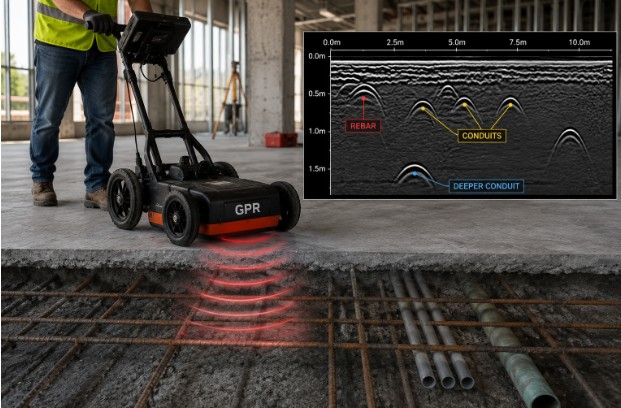
Ground Penetrating Radar, also called GPR testing, is a method for scanning concrete to detect hidden objects below the surface. The equipment sends radar signals into the concrete and reads the signals that bounce back. These signals help technicians see what is hidden below.
GPR testing can help locate:
- Rebar
- Electrical conduits
- Post-tension cables
- Underground utilities
- Empty spaces
- Hidden structural objects
Unlike drilling holes or cutting into concrete, GPR testing does not damage the structure. The process is safe, fast, and non-destructive.
Contractors often use GPR testing before:
- Core drilling
- Concrete cutting
- Utility installation
- Renovation work
- Structural anchoring
- Mechanical upgrades
Scanning first helps contractors avoid hitting hidden systems during drilling.
Why Drilling Without GPR Testing Is Risky
Many concrete slabs and walls contain hidden systems that cannot be seen from the outside. Drilling without scanning first raises the chance of damage.
One common problem is hitting hidden electrical conduits. Damaged conduits can shut off power, create safety risks, and delay the project. Repairs may require more labor and extra inspections before work can continue.
Post-tension cables are another major concern. These cables help support large concrete structures. Accidentally cutting one can weaken the structure and create unsafe conditions for workers nearby.
Rebar damage is also common when drilling without scanning. Rebar gives concrete extra strength and support. Damaging these bars can weaken the slab or wall.
Water lines, communication lines, and underground utilities can also be damaged during drilling. Fixing these systems often increases project costs and slows down the work.
Without GPR testing, contractors may rely on old plans or guesswork. Professional scanning helps remove uncertainty before drilling begins.
How GPR Testing Helps Prevent Costly Mistakes
Professional GPR testing helps contractors avoid problems before drilling starts. The scan provides useful information about what lies beneath the surface.
Finds Safe Drilling Areas
GPR scanning helps locate open areas where contractors can drill safely. It lowers the chance of damaging hidden conduits, cables, or utilities.
Helps Prevent Structural Damage
Avoiding hidden reinforcement systems helps preserve the structure’s strength. It lowers the risk of expensive repairs and project delays.
Improves Job Site Safety
Drilling into electrical systems or post-tension cables can pose a serious risk. GPR testing helps find these hazards before work begins.
Reduces Delays
Unexpected utility strikes or concrete damage can stop a project in its tracks. Scanning before drilling helps contractors avoid these delays.
Saves Money
Repairing damaged systems can become expensive. GPR testing helps reduce repair costs, downtime, and liability issues during construction.
Professional scanning usually costs much less than repairing damage after a drilling mistake.
How T.D. Stevens Electrical Performs GPR Testing
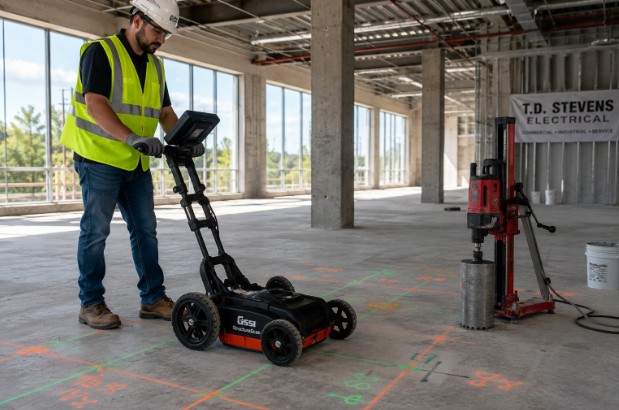
T.D. Stevens Electrical follows a rigorous process to deliver accurate scan results to contractors and property owners in Humble and Houston.
Site Review
Before scanning starts, technicians review the project and inspect the work area. Surface conditions and drilling plans help determine the best scanning method.
This step helps improve accuracy and ensures important areas receive proper attention.
Concrete Scanning
Ground-Penetrating Radar equipment scans the concrete surface in a controlled pattern. The radar system detects hidden objects below the slab or wall.
Technicians look for:
- Rebar
- Electrical conduits
- Post-tension cables
- Underground utilities
- Embedded structural objects
The scan creates a map showing the locations of hidden systems before drilling begins.
Data Review
After scanning is complete, technicians carefully review the radar results. It helps identify safe drilling areas and locations to avoid.
Experienced technicians know how to read radar signals and correctly identify hidden hazards. Proper interpretation matters because incorrect readings can still lead to drilling mistakes.
Reporting and Marking
Safe drilling locations and problem areas are marked clearly for contractors. Reports help crews plan drilling work safely and efficiently.
This process helps reduce mistakes while improving safety and project organization.
Industries That Use GPR Testing
Many industries use GPR testing before drilling or cutting into concrete structures.
Commercial Construction
Commercial buildings often contain electrical systems, utilities, and reinforcement materials hidden inside concrete slabs and walls.
GPR testing supports:
- Office buildings
- Retail spaces
- Warehouses
- Restaurants
- Mixed-use developments
Electrical Contractors
Electrical projects often require drilling for conduit installation, service upgrades, and equipment mounting. GPR testing helps electricians avoid damaging hidden systems.
Plumbing and Mechanical Contractors
Mechanical and plumbing contractors often perform core drilling for pipes and equipment installations. GPR scanning helps reduce the risk of utility damage and structural problems.
Renovation Projects
Older buildings may contain hidden systems that do not appear on old construction plans. GPR testing helps contractors complete renovation work more safely.
Government and Institutional Buildings
Schools, hospitals, and government buildings often contain utility systems that require careful scanning before drilling work begins.
Common Situations Where GPR Testing Is Needed
Some contractors only think about scanning after a mistake happens. However, GPR testing should be included in the planning process before drilling begins.
Common uses for GPR testing include:
- Core drilling through concrete
- Utility installation
- Electrical conduit work
- HVAC upgrades
- Structural anchoring
- Concrete cutting
- Renovation work
- Demolition projects
- Equipment installation
Whenever hidden systems may exist below the surface, GPR testing helps improve safety and reduce project risks.
Contractors seeking additional construction support can also check our services to learn more about the electrical and construction services offered by T.D. Stevens Electrical throughout Humble and Houston.
Benefits of Working With T.D. Stevens Electrical
Contractors throughout Humble and Houston rely on T.D. Stevens Electrical for dependable GPR testing services because safety and accuracy matter on every project.
Experienced Technicians
Our team understands both construction work and electrical systems. It helps us identify hazards before drilling begins.
Advanced Equipment
Modern GPR technology helps provide accurate scans for safer drilling operations.
Fast Service
Construction schedules matter. Our team works quickly to provide timely scanning and reporting services.
Safety-Focused Approach
Every scan is performed with safety in mind. Our goal is to help protect workers, equipment, and structures during drilling work.
Clear Communication
Contractors receive easy-to-read reports and clearly marked drilling areas to help simplify project planning.
Why Accurate GPR Testing Matters in Houston
Construction projects throughout Houston often involve large buildings, reinforced concrete systems, and utility layouts. Drilling without first scanning can lead to expensive, dangerous problems.
Improper drilling can lead to:
- Structural damage
- Utility interruptions
- Expensive repairs
- Inspection delays
- Safety hazards
- Insurance claims
- Project downtime
Professional GPR testing helps contractors avoid these problems while improving safety and project efficiency.
As commercial construction continues growing throughout Humble and Houston, reliable concrete scanning remains an important part of safe project planning.
If you want more information about electrical safety, construction planning, and drilling preparation, browse our blog for additional resources and project insights from T.D. Stevens Electrical.
Frequently Asked Questions About GPR Testing
What can GPR testing detect?
GPR testing can detect rebar, electrical conduits, post-tension cables, underground utilities, and hidden objects beneath concrete surfaces.
Does GPR testing damage concrete?
No. Ground Penetrating Radar is a non-destructive scanning method that does not damage the structure being scanned.
When should GPR testing be performed?
GPR testing should be completed before core drilling, concrete cutting, anchoring, or major drilling projects.
Can GPR testing help reduce project delays?
Yes. Identifying hidden hazards before drilling begins helps contractors avoid damage that can delay construction.
Protect Your Project With Professional GPR Testing
Drilling into concrete without first scanning can lead to costly, dangerous problems. GPR testing helps contractors identify hidden structures before drilling begins, reducing the risk of damage, delays, and costly repairs.
T.D. Stevens Electrical provides professional GPR Testing in Humble, TX, helping contractors and property owners complete drilling projects safely throughout the Houston area. Our team provides accurate scanning, dependable reporting, and professional support for projects of all sizes.
Schedule GPR Testing in Humble, TX
Need accurate concrete scanning before drilling begins? T.D. Stevens Electrical provides dependable GPR Testing services for contractors, commercial properties, and construction projects throughout Humble and the Houston area.
Contact us today to request GPR testing services or schedule a consultation for your upcoming drilling project.